Unknown's avatar

About joecrow91

When I'm not at work, I'm an avid reader of theology, especially related to historical Jesus studies, Pauline thought, Church history, and social justice. I hope to produce clear, concise, and interesting book reviews that spark enjoyable conversations about interesting ideas in theology. My wife is also a pretty awesome theology student herself.

Spiritual Formation and Theology: A Review of Keith L. Johnson’s “Theology as Discipleship”

theology as discipleship

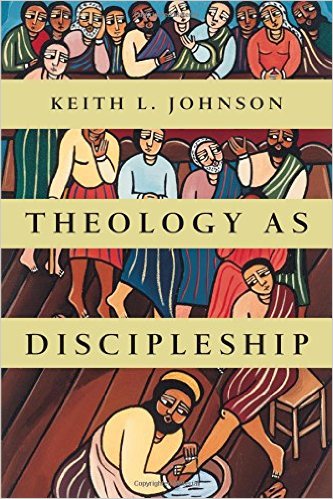
Academic theology is dry, irrelevant to the rhythms of everyday life, and even potentially detrimental for those seeking to pursue a life of deep discipleship. These kinds of charges might strike some as strange, but in the first chapter of Theology as Discipleship, Keith L. Johnson notes that, unfortunately, they are surprisingly common in the contemporary Church. “In fact, many smart and faithful Christians cringe when they hear the word theology due to the negative connotations the discipline carries” (p.20).

For Johnson, the fact that these charges are plausible in the eyes of so many suggests that, sadly, a perceived divide has developed between the world of academic theology and the everyday practices of Christian life (p.11). He acknowledges that:

It is possible for a Christian to participate in the church for years and never engage in disciplined theological thinking about core Christian doctrines or the history of the church’s debates about them. It is also possible for academic theologians to devote their entire careers to the discipline and never be asked to translate or apply the content of their scholarship to the concrete realities that shape the daily life of the church. (p.12)

Continue reading

Reading Israel’s Scripture with Fresh Eyes: A Review of Richard B. Hays’ “Echoes of Scripture in the Gospels”

echoes of scriptureIn the Gospel of John, Jesus makes a pretty astonishing claim: “If you believed Moses, you would believe me, for he wrote about me” (5:46, NRSV). Similarly, Luke remarks in his account of Jesus’ conversation with the two disciples on the road to Emmaus that “he [Jesus] interpreted to them the things about himself in all the scriptures” (24:27, NRSV).

In one way or another, this claim that the events of Jesus’ life, death, and resurrection took place “according to the scriptures” sits at the heart of the Christian confession. But what does it mean to say that Moses wrote about Jesus? In the modern era, these sorts of claims have fallen on rather hard times. In the introduction of Echoes of Scripture in the GospelsRichard B. Hays brings up the German scholar Udo Schnelle, who brushes aside the possibility of doing “biblical theology” because “the Old Testament is silent about Jesus Christ” (p.3). Hays suggests that the writers of the New Testament would be surprised to learn this. For them, Christ’s resurrection provided the integrative “hermeneutical clue” that allowed them to reread Israel’s Scriptures with fresh eyes and find Jesus prefigured in them (p.3). Hays explains that one of the goals of his book is to offer: Continue reading

Participating in the Theater of Redemption: A Review of Kevin Vanhoozer’s “The Drama of Doctrine”

drama of doctrineIt was the 2nd century church father Tertullian who asked, “What does Athens have to do with Jerusalem?” Readers coming to Kevin Vanhoozer’s dense and immensely rewarding The Drama of Doctrine might initially voice a similar question: “What does Broadway have to do with Jerusalem?” In other words, what does the church have to learn about its task from the theater? I believe that Vanhoozer’s reply would likely be something along the lines of, “Actually, more than you might think.”

The core of Vanhoozer’s proposal consists in a series of striking theatrical metaphors for theology, Scripture, interpretation, the Church, and even the pastor (p.xii). For him, these metaphors are appropriate because the world of “faith seeking understanding” is itself dramatic. He explains, “At the heart of Christianity lies a series of divine words and divine acts that culminate in Jesus Christ… The gospel—God’s self-giving in his Son through the Spirit—is intrinsically dramatic” (p.17). As a theological metaphor, the theater can also help show “how we come to know things not simply by beholding and contemplating them but by indwelling and participating in them” (p.79). Continue reading

The Summer Reading List: 2016 Edition

My days of letting out a long-awaited sigh of relief after having turned in the final paper of the semester are (for the time being) behind me. Now, summer really isn’t so different from any other time of the year. But I still love summer reading lists. As I said last year (in The 2015 Edition), it still makes my heart glad to see people around me (teachers, professors, students, and headmasters) “giddy with the prospect of reading time arriving thanks to the summer months.” Well, that’s still true. So let’s once again delve into this year’s list of books that I hope to read by the time autumn comes back around (and classes for those involved in such things). I truly intend to get through all these titles, but I’m also quite aware that my literary eyes are probably far too big for my stomach. Still, it will be fun to try.

Five New Voices

1. Francis Watson. He’s an English scholar who has devoted most of his career to New Testament studies and theological hermeneutics. Watson has taught at Durham University since 2007, and I’ve been wanting to read him for quite a while:

fourfold gospel

The Fourfold Gospel: A Theological Reading of the New Testament Portraits of Jesus. From the book’s description on Amazon: “Francis Watson, widely regarded as one of the foremost New Testament scholars of our time, explains that the four gospels were chosen to give a portrait of Jesus. He explores the significance of the fourfold gospel’s plural form for those who constructed it and for later Christian communities.” I recently finished Richard Hays’ excellent Echoes of Scripture in the Gospels, so I’m excited to listen to Watson’s perspective on the significance of the fourfold nature of the Gospels with Hays’ work in mind. Continue reading

Attending to God’s Address: A Review of Craig Bartholomew’s “Introducing Biblical Hermeneutics”

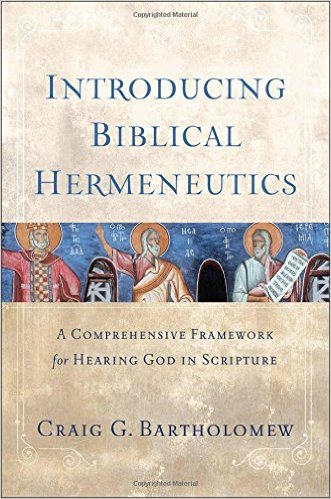
introducing biblical hermeneuticsWhat should healthy biblical interpretation look like? Craig Bartholomew’s Introducing Biblical Hermeneutics addresses this question head on, giving a sweeping introduction to the subject that both explains the history and importance of various academic approaches while also developing for readers a vision of biblical hermeneutics that is trinitarian in shape and aimed ultimately at enabling “obedient attention to God’s address through his Word” (p.10). Bartholomew was born in South Africa in 1961 and now teaches at Redeemer University College in Ontario, Canada.

Hermeneutics deals with the study of interpretation, especially in regards to works of literature. Therefore, it’s a particularly relevant area of study for Christians given the uniquely authoritative role Scripture plays in shaping the beliefs and practices of the Church. Bartholomew invokes the words of Karl Barth to make clear the kinds of demands made by the Bible on its readers, “If Scripture is the Word of God, then, as Karl Barth rightly observes, no one can stand before it as a spectator” (p.45). Hermeneutics might seem intimidating and irrelevant, but Bartholomew argues that it actually is “the theory of a practice,” adding that when it’s done well, “hermeneutics deepens and enriches our practice of engagement with the Bible as Scripture” (p.12). Continue reading

The Parable of the Two Lost Sons: A Review of Tim Keller’s “The Prodigal God”

prodigal god*This post is by guest writer Ryan Parsons. He’s a longtime friend and great conversation partner. Ryan recently graduated from Appalachian State University with an M.A. in History and plans to begin seminary in the near future.

Celebrated pastor and author Tim Keller has identified a perplexing problem in the American Church, a particular discrepancy between belief and behavior. Churches do not appear to be drawing the same crowds that Jesus Himself drew. Keller argues in The Prodigal God: Recovering the Heart of the Christian Faith that churches are actually drawing flocks of people who resemble those who were most offended by Jesus’ message (pp.18-19). Even among lifelong churchgoers, there seems to be a lack of understanding as to how the gospel should shape everyday life (pp.xv-xvi). Keller takes pains to stress that “God’s reckless grace” should be “our greatest hope” and “a life-changing experience” (p.xx). How can a genuine experience and knowledge of God’s grace not change how we live?

Keller uses the Parable of the Prodigal Son as a platform to convey the gospel to both seekers and lifelong Christians, contending that “if the teaching of Jesus is likened to a lake, this famous Parable … would be one of the clearest spots where we can see all the way to the bottom” (pp.xvi-xvii). He argues that the traditional focus of the parable is wrong, given that both the younger brother and the elder brother represent “a different way to be alienated from God” (p.9). Perhaps we should instead think of it as the “Parable of the Two Lost Sons” (p.20). Before salvation, Keller suggests, each believer was either a younger brother or an elder brother; that we either tried to find happiness and fulfillment through self-discovery or moral conformity (p.34). In other words, we can rebel against God and be alienated from him either by breaking his rules or attempting to keep all of them diligently (p.42). Continue reading

Exploring the Old in the New: A Review of Stanley Porter’s “Sacred Tradition in the New Testament”

sacred traditionIn Sacred Tradition in the New Testament, Stanley Porter takes an extended look at the use of Israel’s Scriptures in the writings of the New Testament (NT). It’s clear that the Old Testament (OT) was crucially significant for the NT’s authors. But even if that’s agreed upon, and despite the spilling of much literal ink and the shedding of much metaphorical blood, legitimate questions remain. What led the writers of the NT to interpret the OT in the ways they did? How should we determine when a passage from the OT is being used in the NT, especially if the reference is indirect or subtle? These are the kinds of questions that Porter, a professor at McMaster Divinity College, seeks to explore.

Porter develops a number of proposals in Sacred Tradition in the New Testament. One of them is that the study of the OT’s use in the NT should shift away from the strict investigation of individual OT verses and onto broader themes, concepts and figures (p.49). In the introduction, he writes, “My approach to the use of sacred tradition tries to find more significant passages or themes within the OT and explore their use in the NT” (p.x). By sacred tradition, it should be noted that Porter basically means the OT, along with the Dead Sea Scrolls and some Hellenistic texts (p.3).

Before he begins tracing the NT development of OT themes and figures, though, Porter first attempts to bring greater methodological precision and clarity to the conversation (p.2).  Continue reading

Do Paul’s Letters Have a Narrative Substructure? A Review of “Narrative Dynamics in Paul”

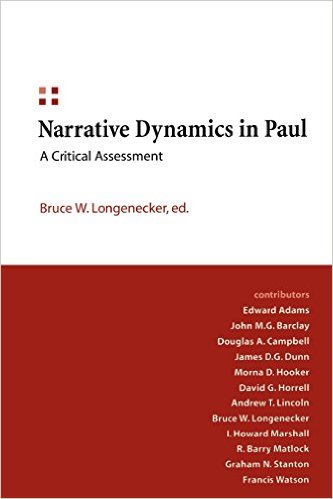
narrative dynamics in paulIn 1980, J.C. Beker declared in Paul the Apostle that, “Paul is a man of the proposition, the argument and the dialogue, not a man of the parable or story” (p.352). At the time, he was far from the only one who took that as an assumed position. A few short years after those words were written, though, the winds of change began to blow.

Over the last few decades, significant parts of Pauline scholarship have drawn enthusiastically from the field of literary theory, resulting in an increased amount of attention being given to the evocative ways in which Paul’s language engages with and alludes to earlier biblical narratives, among other things.  Continue reading

Slow and Steady Growth: A Review of Alan Kreider’s “The Patient Ferment of the Early Church”

patient ferment

On the first page of Alan Kreider’s new book, The Patient Ferment of the Early Church, he asks readers to pause and consider a sometimes overlooked question, “Why did this minor mystery religion from the eastern Mediterranean—marginal, despised, discriminated against—grow substantially, eventually supplanting the well-endowed, respectable cults that were so supported by the empire and aristocracy?”

Kreider, a Harvard-trained professor emeritus at Anabaptist Mennonite Biblical Seminary, has spent much his career studying early Christianity. In The Patient Ferment of the Early Church, he draws together this lifetime of work into a readable yet detailed study the early Church’s growth, looking especially at the period before Constantine’s reign (p.4). Continue reading

New Creation in John’s Gospel

st mary's episcopal church

St. Mary’s Episcopal Church of the Frescoes in West Jefferson, NC. Author’s photo.

New creation. It’s one of Paul’s more vivid ways of describing what has come about because of Christ’s life, death, and resurrection from the grave. In his second letter to the Corinthians, he told them, “if anyone is in Christ, there is a new creation: everything old has passed away; see, everything has become new!” (5:17 NRSV). 

In one of N.T. Wright’s books on Pauline theology, he argues that for Paul, Christ’s death and resurrection not only marked the decisive defeat of sin and death, but also accomplished nothing less than the launching of God’s long-awaited renewal of creation (2009, pp.34-38). Now of course, emphasizing new creation in Paul doesn’t necessarily entail minimizing justification or other important Pauline doctrines. Instead, the task is to integrate them. The same man who declared that Christ personally “loved me and gave himself for me” (Gal. 2:20 NRSV) was also able to step back and, considering the accomplishments of Christ on a larger scale, write, “in Christ God was reconciling the world to himself” (2 Cor. 5:19 NRSV). 

Investigating the myriad of ways in which new creation fits into the larger whole of Pauline theology would be intriguing, but we are going to dwell this time on a slightly different, and maybe more interesting topic: is new creation a New Testament theme or merely a Pauline one? In order to begin developing something of an answer to this question, we are going to spend most of our time in the Gospel of John, a poetic and vivid text that at first blush bears little resemblance to Paul and his letters. Continue reading